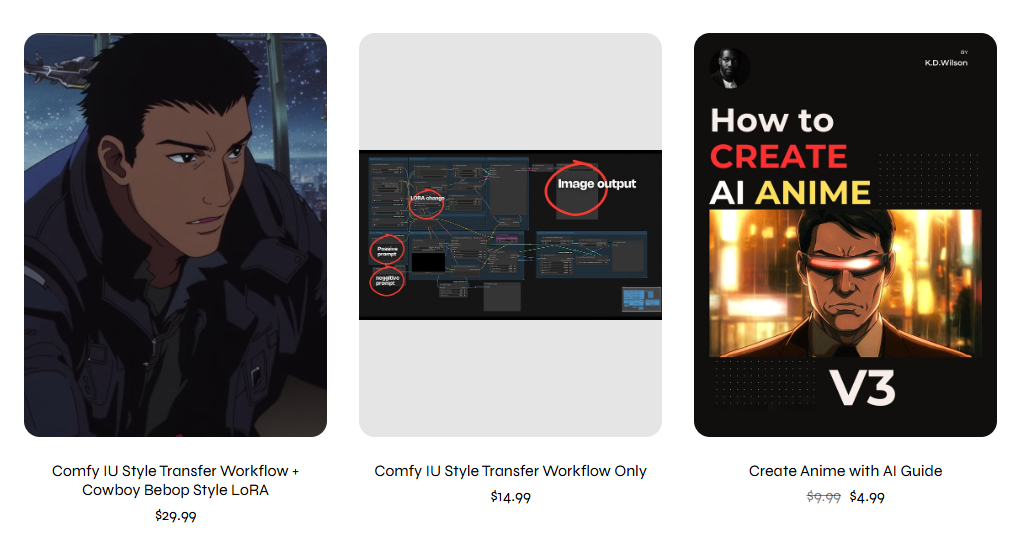

Description
K.d Wilson – AI Anime School: Complete In-Depth Review
The intersection of artificial intelligence and digital art has completely reshaped the creative landscape. Among the various specialized courses emerging today, the training program created by K.d Wilson – AI Anime School stands out as a dedicated pathway for creators looking to master anime-style generation, character design, and visual storytelling using modern AI models.
Whether you are an aspiring illustrator, a seasoned concept artist exploring new pipelines, or a content creator aiming to produce high-quality anime assets, choosing the right educational platform is critical. This comprehensive review breaks down the curriculum, learning experience, practical application, and overall value of the program to help you decide if it aligns with your artistic goals.
1. What is the Program About?
The core focus of this training is bridging the gap between basic text-to-image prompts and production-ready anime artwork. Many beginners quickly discover that generating a single compelling image is easy, but maintaining visual consistency across multiple frames, scenes, or character poses requires structured control systems.
The program guides students away from random prompt generation toward a deterministic workflow. It covers how to leverage diffusion models, custom LoRAs (Low-Rank Adaptations), ControlNets, and specialized anime checkpoints to achieve professional results.
2. Comprehensive Curriculum Breakdown
The course is structured logically, taking learners from foundational setup to complex animation workflows.
Module 1: Foundations of AI Art and Anime Aesthetics
-
Environment Setup: Configuring local environments (like Automatic1111, ComfyUI, or Forge) versus cloud-based solutions.
-
Understanding Anime Physics & Design: Analyzing how AI interprets line work, cel-shading, lighting, and iconic anime aesthetic markers.
-
Model Selection: Choosing the best base models and fine-tuned anime checkpoints (such as AnythingV5, NijiJourney, or specialized SDXL/SD3 variants).
Module 2: Prompt Engineering for Precise Rendering
-
Anatomy of an Anime Prompt: Structuring positive and negative prompts to dictate artist styles, clothing, camera angles, and emotional expressions.
-
Weighting and Attention Control: Fine-tuning element emphasis to avoid visual clutter and distorted features.
-
Style Mixing: Combining traditional watercolor textures, modern digital shading, and retro 90s anime vibes effortlessly.
Module 3: Advanced Character Consistency & Control
-
ControlNet Mastery: Using OpenPose, Canny, Depth, and Lineart models to lock in specific poses, camera compositions, and hands.
-
LoRA Training & Integration: Step-by-step guidance on training custom character models using your own reference sheets to ensure 100% character continuity across different scenes.
-
Face & Detail Refinement: Utilizing Inpainting, Adetailer, and Upscaling methods to fix anatomical errors and upscale images to crisp, high-definition resolutions.
Module 4: Animation & Video Pipelines
-
Sequence Generation: Creating frame-by-frame animation assets using AnimateDiff or Deforum.
-
Lip-Syncing & Voice Alignment: Combining AI audio tools with anime visuals to produce short, animated dialogue clips.
-
Post-Processing & Compositing: Simple video editing techniques, color grading, and adding motion blur or atmospheric particles for a polished studio finish.
3. Hands-On Learning Experience & Teaching Style
A primary highlight of the training delivered through K.d Wilson – AI Anime School is its project-based approach. Rather than focusing strictly on abstract theory, lessons revolve around practical deliverables.
-
Step-by-Step Screen Recordings: Clear, high-definition videos showing exact parameters, seed management, and node configurations.
-
Downloadable Assets: Access to prompt lists, pre-configured workflow JSON files for ComfyUI, and sample dataset templates for LoRA training.
-
Real-Time Problem Solving: Dedicated segments addressing common failures—such as distorted hands, blurry backgrounds, or style bleed—showing you exactly how to troubleshoot them.
4. Key Strengths and Standout Features
| Feature | Description | Benefit |
| Workflow Efficiency | Focuses heavily on ComfyUI and ControlNet integration. | Cuts down manual editing time by over 70%. |
| Character Continuity | In-depth LoRA training modules. | Allows users to create recurring characters for manga, webtoons, or short films. |
| No-Code Approach | Simplified technical explanations. | Accessible for non-coders and traditional artists transition to AI workflows. |
| Regular Updates | Adapts to new generative models as technology evolves. | Keeps your skills relevant in a fast-moving industry. |
5. Potential Drawbacks to Consider
To keep this review balanced and honest, there are a few prerequisites and limitations potential students should keep in mind before enrolling:
-
Hardware Requirements: To run local workflows smoothly (especially local LoRA training and AnimateDiff rendering), a desktop PC with a modern NVIDIA GPU (ideally 8GB+ VRAM) is strongly recommended. Cloud alternatives are discussed, but they add subscription costs.
-
Pacing for Absolute Tech Novices: While the course avoids coding, the sheer number of parameters in software like ComfyUI can feel overwhelming during the first week.
-
Rapidly Evolving Tech: AI tools update frequently. While foundational concepts remain solid, specific UI buttons or software extensions may change over time.
6. Who Is This Course Best Suited For?
-
Aspiring Manga & Webtoon Creators: Storytellers who want to produce full graphic novels or comic panels without spending years building manual drawing speed.
-
Indie Game Developers: Creators needing high-quality anime character portraits, dialogue sprites, and background art on a budget.
-
Traditional & Digital Artists: Visual creators wanting to incorporate AI as a speed-boosting tool in their existing sketch-to-finish pipelines.
-
Content Creators & YouTubers: Video producers looking to generate original anime avatars, thumbnails, and animated shorts for audience engagement.
7. Final Verdict: Is It Worth It?
The education provided by K.d Wilson – AI Anime School delivers genuine value for creators serious about mastering generative anime production. Rather than offering surface-level prompt tricks found in free video tutorials, it systematically addresses the core bottleneck of AI creation: control and consistency.
If you are willing to invest the time to set up your tools and practice the workflows, this program provides a clear, efficient roadmap to transforming raw concepts into professional, high-resolution anime art.


Reviews
There are no reviews yet.