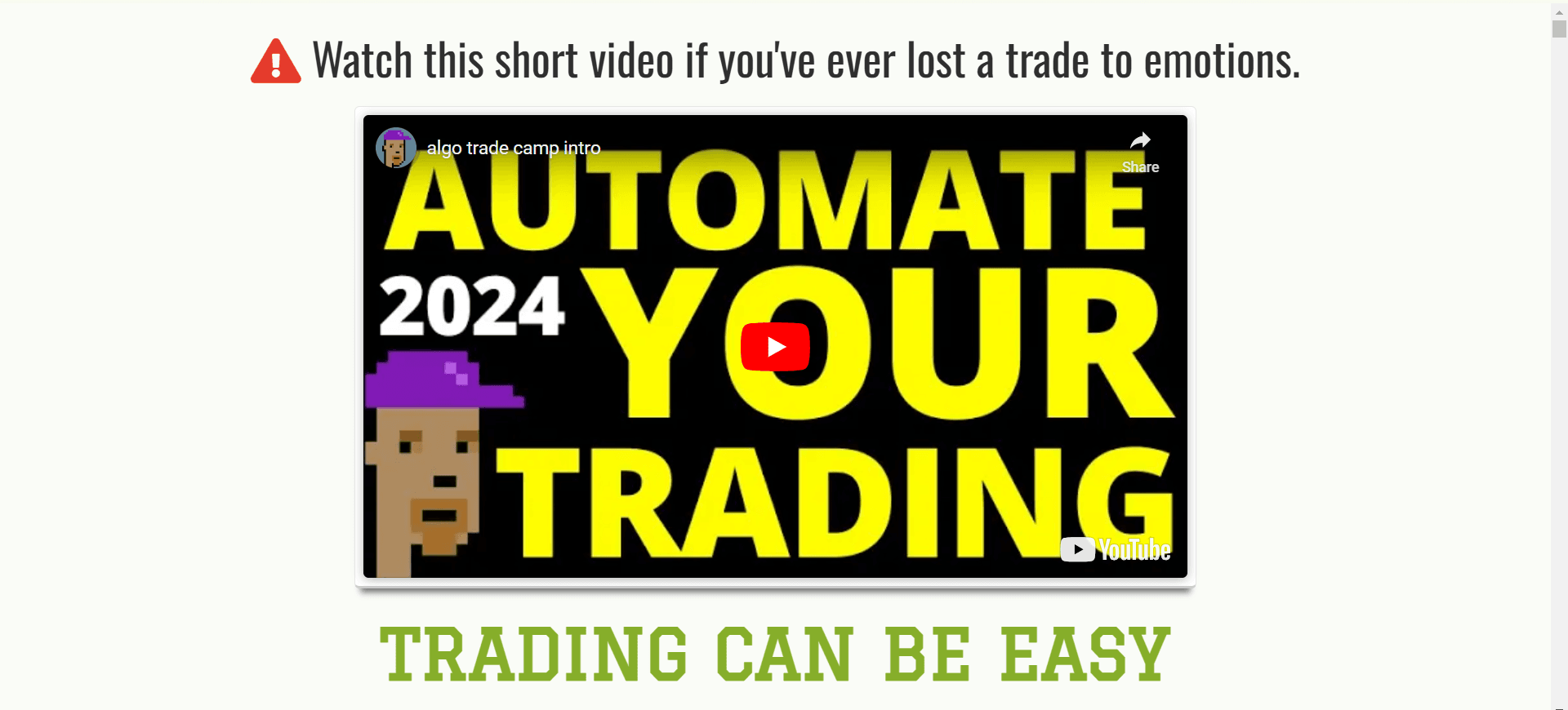

Description
Algo Trade Camp – Algo Trading Bootcamp Review: The Honest Unfiltered Breakdown
In the fast-moving financial markets, emotional decision-making, hesitation, and fatigue are the biggest drawbacks for retail traders. Algorithmic trading solves these issues by turning mechanical strategies into automated code that executes orders with precision. However, learning to build, test, and deploy custom trading bots often feels overwhelming—requiring a mix of data science, programming, and market structure knowledge.
Enter Algo Trade Camp – Algo Trading Bootcamp. Designed as a practical, code-first training program, this bootcamp promises to transition manual traders and coders into self-sufficient algorithmic developers.
This comprehensive review breaks down the curriculum, hands-on coding framework, practical strengths, potential limitations, and whether the program lives up to its hype.
What Is Algo Trade Camp – Algo Trading Bootcamp?
Algo Trade Camp – Algo Trading Bootcamp is an intensive educational training platform focused on teaching students how to design, backtest, and automate custom quantitative trading strategies. Rather than offering vague theoretical finance lectures or black-box trading signals, the curriculum emphasizes practical execution using Python.
The program takes a structured approach to building automated trading architectures from scratch. Students learn how to connect to broker and exchange APIs, handle real-time market data streams, code risk management parameters, and execute automated orders seamlessly across crypto, stocks, or forex markets.
Manual Trading Struggles:
[Emotional Decisions] ➔ [Hesitation & Late Entries] ➔ [Slippage & Risk Mismanagement] ➔ Burnout

Algorithmic Trading Workflow:
[Systematic Strategy] ➔ [Python Backtesting] ➔ [API Broker Integration] ➔ Automated Execution
Core Curriculum & Learning Pillars
1. Python Foundations for Algorithmic Trading
The curriculum begins by establishing a strong foundation in Python—the industry standard programming language for quantitative finance. You learn how to use specialized data libraries such as Pandas and NumPy to clean financial time-series data, calculate technical indicators, and manipulate market data feeds efficiently.
2. Strategy Logic & Backtesting Frameworks
A trading algorithm is only as good as its underlying statistical edge. This core pillar teaches you how to construct quantitative trading logic—including mean reversion, trend following, and breakout models. You learn how to backtest strategies against historical data to evaluate essential performance metrics like drawdown, Sharpe ratio, win rate, and profit factor before risking real capital.
3. API Integration & Order Execution
Bridging the gap between a backtested back-end model and live market execution is where many aspiring quantitative developers struggle. The course walks step-by-step through setting up WebSockets and REST APIs with major exchanges and brokerage platforms. You learn how to send market and limit orders, manage API keys securely, and handle latency or connection drops gracefully.
4. Risk Management & Bot Automation
Automated execution requires strict automated guardrails. The final modules focus on hardcoding stop-loss logic, position-sizing algorithms, max drawdown limits, and portfolio rebalancing rules directly into your trading bots to protect your capital around the clock.
Key Highlights & Standout Features
-
Code-First Practical Approach: Emphasizes real, functional Python scripts over abstract academic theory, allowing students to build usable projects from day one.
-
Reusable Code Templates: Provides plug-and-play script bases for API connections, backtesting engines, and order handling that accelerate development.
-
Multi-Market Applicability: The core engineering principles apply across cryptocurrency exchanges, traditional equities brokers, and futures markets.
-
Focus on Risk Preservation: Integrates risk controls directly into the coding process to ensure trading algorithms adhere to strict capital protection guidelines.
Drawbacks to Consider
-
Requires Coding Commitment: While structured for beginners, students with zero prior programming experience will need extra time to get comfortable with Python syntax.
-
No “Guaranteed Money” Shortcuts: The bootcamp teaches you how to build infrastructure and test strategies; it does not sell a magic pre-made strategy that prints effortless profits.
-
Active Market Maintenance Needed: Automated trading requires ongoing monitoring, code updates, and strategy adjustments to adapt to shifting market regimes.
Comparison: Generic Trading Courses vs. Algo Trade Camp
Who Should Join This Bootcamp?
-
Manual Traders: Experienced traders who want to eliminate emotional errors, stop staring at charts all day, and automate their existing rule-based strategies.
-
Developers & Programmers: Software engineers looking to apply their coding skills to financial markets and build custom quantitative trading tools.
-
Aspiring Quants & Finance Enthusiasts: Individuals looking to build a career portfolio in quantitative finance or automated fund management.
Final Verdict
Algo Trade Camp – Algo Trading Bootcamp stands out as a solid, practical program for anyone serious about mastering automated trading. By prioritizing code execution, systematic backtesting, and direct API integration, it strips away the noise of retail trading and equips you with genuine quantitative software skills. If you are willing to put in the effort to learn Python and build automated trading systems systematically, this bootcamp offers high-value training that delivers real results.



Reviews
There are no reviews yet.