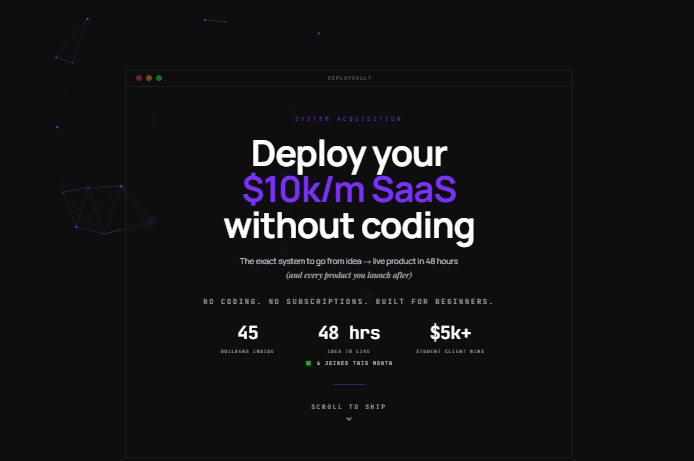

Description
DEPLOY VAULT – Launch Protocol Review: The Ultimate Honest Breakdown
In modern software engineering and cloud operations, executing smooth, zero-downtime releases while keeping sensitive credentials protected remains one of the hardest challenges engineering teams face. Misconfigured secrets, fragmented environment variables, and unverified release steps frequently lead to costly outages, security breaches, and developer friction.
Enter DEPLOY VAULT – Launch Protocol. Designed as a high-security deployment management and release orchestration framework, this system promises to bridge the gap between secrets management and automated deployment pipelines. It gives engineering teams a controlled, deterministic blueprint to ship code confidently.
This comprehensive review provides an in-depth, unfiltered look into how the platform works, its core feature architecture, operational benefits, potential drawbacks, and whether it deserves a place in your DevOps stack.
What Is DEPLOY VAULT – Launch Protocol?
DEPLOY VAULT – Launch Protocol is an integrated deployment execution framework engineered to streamline software release pipelines while maintaining bank-grade secrets security. Rather than treating secrets isolation and release orchestration as separate engineering problems, the protocol merges credential access control directly with stage-by-stage deployment validation.
The system acts as a secure buffer between your version control repositories, cloud environments (such as AWS, Azure, or GCP), and continuous integration pipelines. By enforcing cryptographic access rules and real-time environment validation prior to code execution, it ensures that only verified code packages with authorized credentials reach staging and production environments.
Traditional Deployment Workflow:
[Raw Secrets in CI] ➔ [Manual Release Steps] ➔ [Unchecked Vars] ➔ High Outage & Leak Risk

DEPLOY VAULT Workflow:
[Vault Secrets Injection] ➔ [Automated Health Checks] ➔ [Deterministic Launch] ➔ Zero-Downtime Release
Core Pillars of the Platform Architecture
1. Cryptographic Secrets Injection
Hardcoded API keys and loosely scoped CI/CD variables are leading entry points for cloud security breaches. The platform replaces persistent credentials with dynamic, short-lived tokens injected directly into execution runtimes at the exact moment of deployment. Once the release completes, access permissions expire automatically, shrinking your attack surface.
2. Deterministic Environment Validation
Deployment failures often stem from drift between staging and production environments. The framework runs automated pre-flight checks before executing any deployment commands. It verifies database schema compatibility, checks endpoint availability, and ensures all required environment variables are mapped accurately.
3. Stage-Gate Release Orchestration
To avoid accidental global rollouts of breaking changes, the system provides built-in deployment gates. Operations teams can configure automated canary releases, blue-green target swaps, or progressive rollout schedules that pause automatically if system health metrics dip below predefined performance baselines.
4. Comprehensive Audit & Compliance Logging
For organizations operating under strict regulatory standards like SOC 2, ISO 27001, or HIPAA, tracking deployment activity is mandatory. The framework maintains immutable, real-time audit trails of every secret accessed, configuration changed, and build deployed, making compliance reporting painless and transparent.
Key Advantages & Highlights
-
Zero-Trust Security Baseline: Ensures environment variables and administrative privileges are exposed exclusively during active deployment windows.
-
Pre-Built CI/CD Integrations: Plugs into major platforms like GitHub Actions, GitLab CI, Bitbucket, and Jenkins with minimal configuration overhead.
-
Reduced Human Error: Standardized deployment execution removes manual terminal commands, preventing accidental production overrides.
-
Rapid Rollback Capabilities: If post-deployment health checks detect errors, automated rollbacks restore the last known stable state in seconds.
Downsides & Limitations to Consider
-
Initial Configuration Curve: Setting up proper identity policies, environment keys, and access rules requires dedicated setup time from senior DevOps staff.
-
Resource Overkill for Micro Projects: Simple static websites or basic single-server applications may not require the heavy security overhead and multi-stage verification layers this protocol offers.
-
Dependency on Centralized Vault Access: If the underlying vault service experiences connectivity issues, scheduled deployment pipelines will pause until access is restored.
Structural Comparison: Standard CI/CD vs. DEPLOY VAULT
Who Is This System Best Suited For?
-
Mid-to-Large Engineering Teams: Companies managing multiple microservices and multi-region deployments that demand automated, fail-safe release gates.
-
FinTech, HealthTech, & SaaS Startups: Teams building software in strictly regulated industries where credential security and audit logs are compliance requirements.
-
DevOps & Infrastructure Consultants: Engineers responsible for standardizing client deployment environments with repeatable, enterprise-grade safety standards.
Final Verdict
DEPLOY VAULT – Launch Protocol delivers a robust, highly dependable framework for organizations serious about securing their release pipelines. By combining automated environment validation with strict, ephemeral secrets management, it eliminates common deployment friction points and protects against disastrous infrastructure leaks. If your team is scaling its production updates and needs a secure, predictable launch standard, this platform represents a top-tier operational upgrade.





Reviews
There are no reviews yet.